Every year, venues across the UK lose their licences for the same reason: serving someone who’d had too much. Under Section 141 of the Licensing Act 2003, selling alcohol to a person who is drunk is a criminal offence. Not “extremely drunk” or “falling over drunk” – just drunk.
The penalty? An unlimited fine. But the real cost is what comes next: licence review, conditions, or revocation. For stadium operators, event venues, and hospitality businesses, that’s not just a fine. That’s the end of your alcohol revenue.
So when self-service bars started appearing in venues – promising faster service, shorter queues, reduced staffing costs – a critical question emerged: how do you stay Section 141 compliant when there’s no bartender watching?
The Problem With Traditional Self-Service Bars
Most self-service bar systems work the same way. Customer arrives, verifies their age (card check, ID scan, or app verification), and gets access to pour their own drinks. The system tracks volume poured and charges accordingly.
That’s fine for age verification. It does nothing for intoxication monitoring.
Once past that initial checkpoint, customers have unrestricted access. Pour after pour, pint after pint, with no assessment of whether they should still be served. The system that verified they were 18 at 7pm has no idea they’re drunk at 10pm.
From a licensing perspective, this is problematic. Section 141 doesn’t care whether a human or a machine dispensed the drink. If your venue served an intoxicated person, you’re liable. The “but it was automated” defence doesn’t exist in law.
Traditional self-service systems create what we call the single-point verification problem. One check at entry. Nothing after. For a licensing authority reviewing your operation, that’s a gap.
Why Staff Judgement Isn’t the Answer
The obvious response: put staff nearby to monitor customers. Problem solved?
Not quite.
Human assessment of intoxication is remarkably unreliable. We tested this during our Innovate UK-funded validation study. Participants were asked to rate their own intoxication level throughout the session. We compared their self-assessment against objective behavioural measurements.
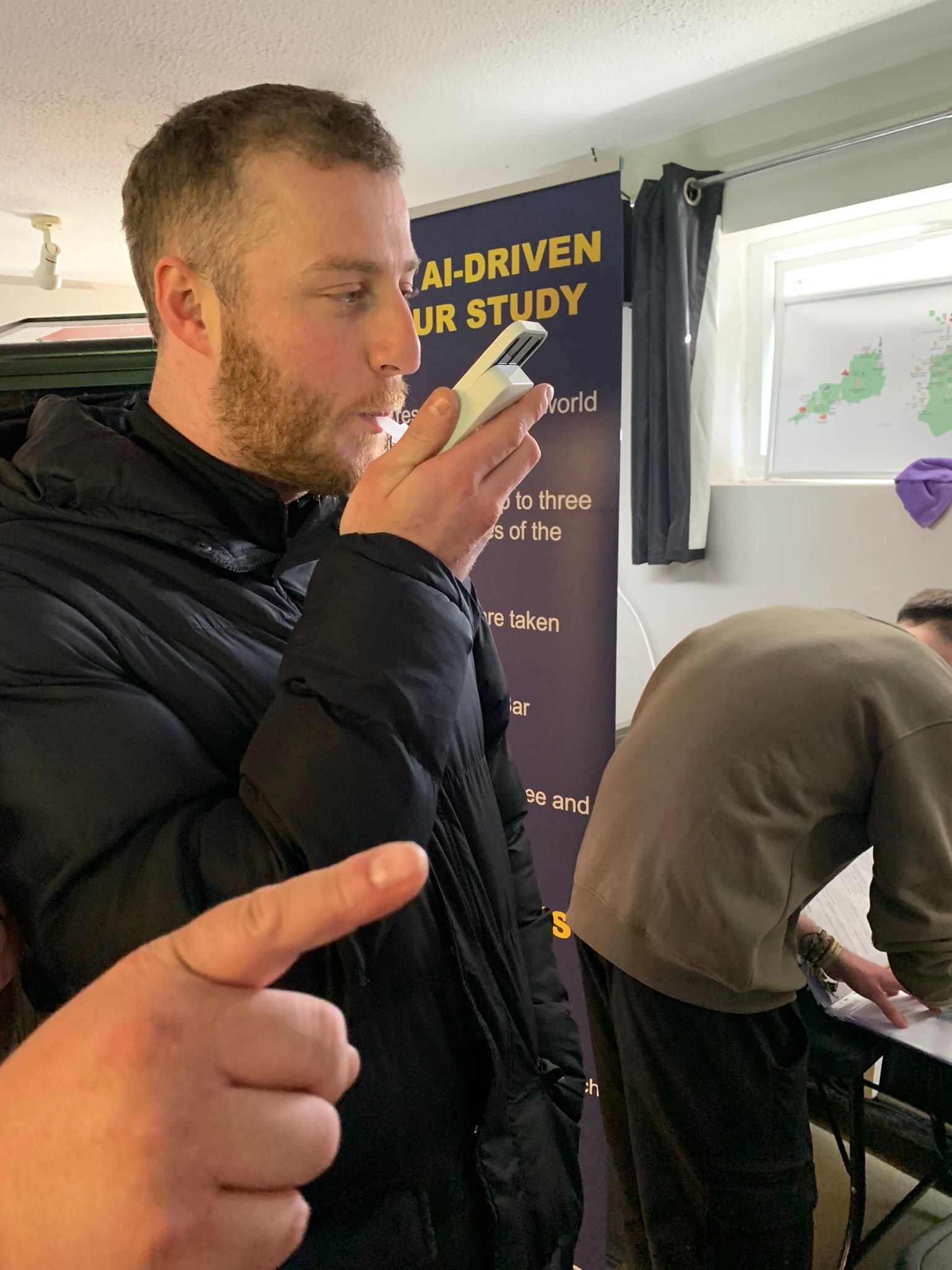
The correlation was poor. People consistently underestimated their own impairment.
If people can’t accurately judge their own state, how reliably can bar staff – managing dozens or hundreds of customers in a busy venue – assess everyone they serve? The honest answer: they can’t. Not consistently. Not accurately. Not in a way that would satisfy a licensing committee asking what steps you took to prevent service to intoxicated persons.
Staff monitoring has another weakness: it’s not documented. When a licensing review happens, what evidence do you have that your team was actively monitoring? Training records and policies are a start, but they don’t prove what actually happened on a specific night.
Continuous Monitoring: The Compliance Solution
This is why we built GangoBar differently.
Instead of single-point verification, our system provides continuous behavioural monitoring throughout each customer’s session. Every interaction with the bar is assessed. The system detects behavioural changes that indicate potential intoxication and responds automatically – pausing service, alerting staff, or requiring a manual check before the next pour.
The key word is “continuous.” Not one check at entry. Ongoing assessment, transaction by transaction.

We’ve now served hundreds of customers across stadium deployments and venue installations. Our controlled validation study – funded by Innovate UK as part of the Preventive Behavioral Intelligence Platform for Cross-Sector Safety project – tested the system rigorously across 96 transactions with breathalyser-verified ground truth.
The results: 92.7% accuracy in detecting behavioural change, with a 0% false positive rate.
That zero matters. In a busy venue, false alarms destroy staff trust in any monitoring system. If the system cries wolf, staff stop responding. Our zero false positive rate means when the system flags someone, it’s genuine. Every time.
What Licensing Authorities Want to See
Licensing committees aren’t technology experts. They’re not interested in how your system works technically. They want to know one thing: what reasonable steps have you taken to prevent serving intoxicated persons?
With continuous behavioural monitoring, you can demonstrate:
Active prevention, not reactive response. The system identifies potential issues before service, not after. This is fundamentally different from CCTV, which only provides evidence after the fact.
Documented audit trail. Every transaction is logged. If a licensing authority asks what happened on a specific night, you have data – not just staff recollections.
Consistent application. The system applies the same standard to every customer, every time. No variation based on how busy it is, who’s working, or whether someone “looks fine.”
Technology-assisted compliance. Licensing authorities increasingly expect venues to use available technology. Demonstrating you’ve invested in compliance technology shows good faith operation.
This doesn’t replace staff responsibility. It augments it. Your team still makes final decisions. But they’re making those decisions with objective data, not just gut feel.
The Commercial Reality
Section 141 compliance isn’t just about avoiding fines. It’s about protecting your business model.
Stadium bars, festival sites, large event venues – these operations depend on high-volume alcohol sales. A licence review triggered by an intoxication incident puts all of that at risk. The cost of compliance technology is trivial compared to losing your primary revenue stream.
There’s also the insurance angle. Demonstrating active intoxication monitoring strengthens your position significantly. You’ve taken documented steps to prevent harm. That matters when claims arise.
And increasingly, venue operators are finding that compliance technology enables operations that wouldn’t otherwise be approved. Want to run unmanned bars in certain areas? Want extended hours? Want to reduce staffing ratios? Licensing authorities are more likely to approve these requests when you can demonstrate robust monitoring technology.
Self-Service Done Right
Self-service bars offer genuine operational benefits: faster service, reduced queues, lower staffing costs, increased customer satisfaction. None of that has to come at the expense of compliance.
The question isn’t whether autonomous bars can stay Section 141 compliant. It’s whether your autonomous bar is designed for compliance from the ground up.
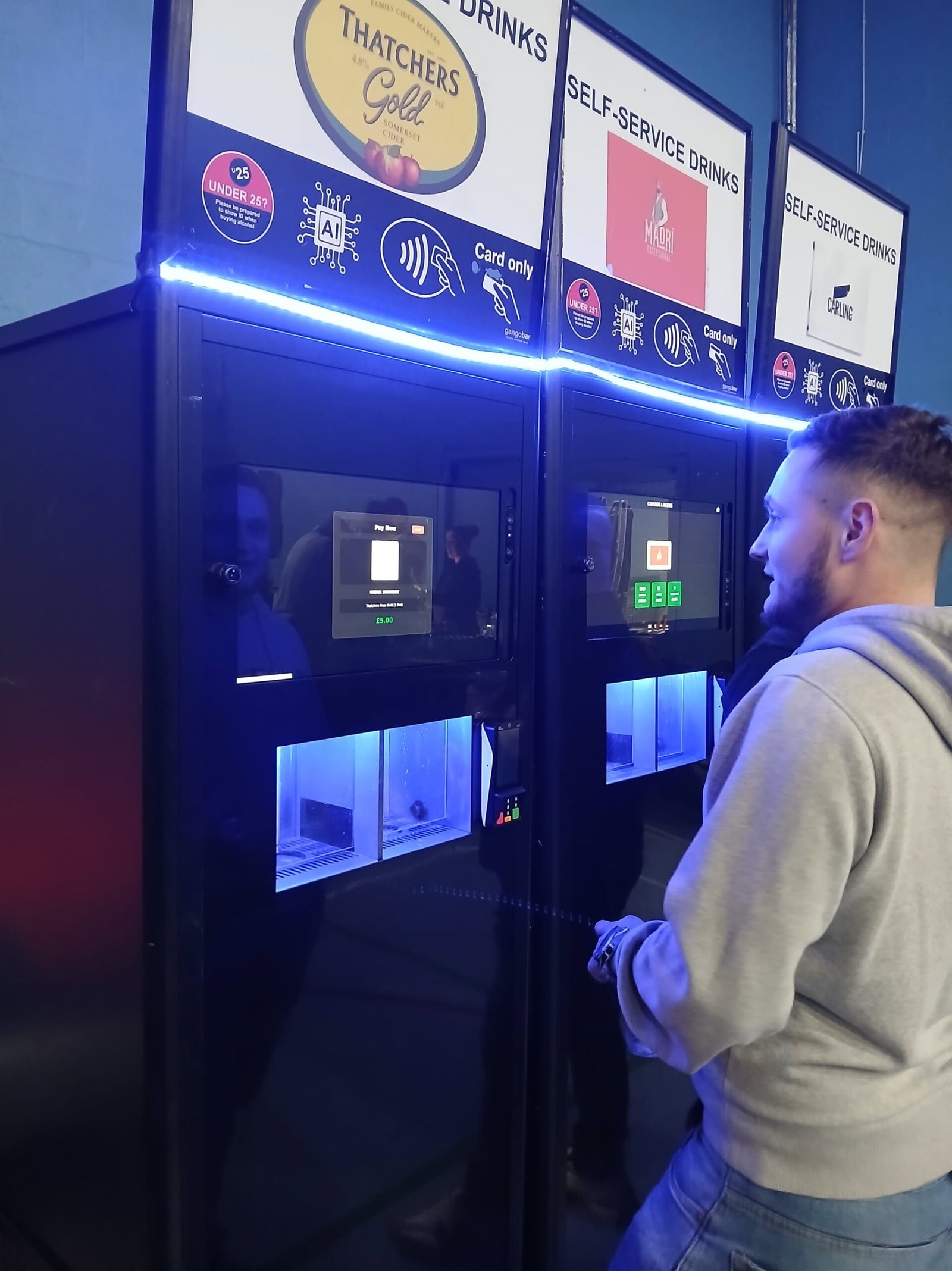
Single-point verification systems weren’t built with Section 141 in mind. They were built for speed and convenience. Compliance was an afterthought – or not a thought at all.
GangoBar was built differently. Continuous monitoring. Documented audit trail. Zero false positive rate so staff trust the alerts. Validated performance backed by Innovate UK funding. Hundreds of real-world customers served.
That’s how autonomous bars stay compliant.
See how it works →